
Gigantic.37
The French Place

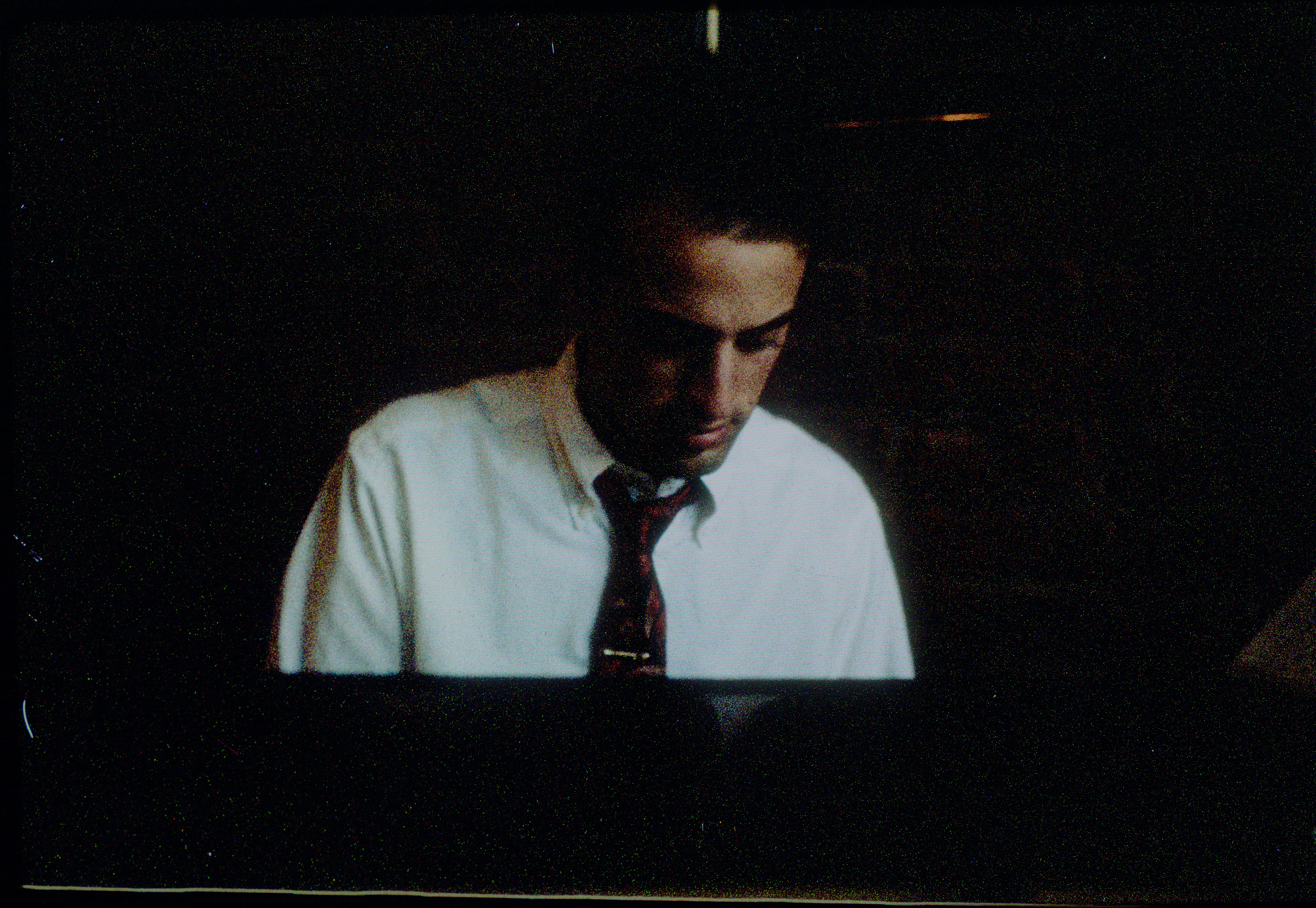
By 1996, the IBM exodus had Kingston in a sleeper hold. Jobs were scarce, boarded-up storefronts multiplied. But, like firemen braving a burning building when everyone else runs out, a few outliers bucked the trend set up shop around that time.
The French place on Fair Street opened that year, a sign in the window said they’d have a piano bar. Obviously the job for me. For a month I pestered the owner, Jean Jaques. He pointed to the empty space near the window.
“Come back when I have a piano.”
Finally it arrived, a medium-sized Yamaha grand still in need of tuning. I skipped over the worst offending notes while I demonstrated for Jean Jaques a twenty-minute mash-up of standards, 70s pop songs, and implausibly reinterpreted disco classics. No sense pretending what kind of piano player I was, he’d find out soon enough.
Turned out Jean Jaques had a subversive streak. He hired me on the spot.
Our little scene soon converged on the French place on nights I played. Other than Artie’s there weren’t a lot of other places to go. Mostly everyone would spread out across clusters of tables, chitter chat over bottles of vin rouge. But whenever I looked behind me, there was Mark LaFalce from Agit Pop and a couple of my other friends, watching to see what I’d do. This kept me on my toes. I practiced for hours to come up with set lists that might surprise them.
Over the course of that past year, Mercury Rev had come to rely on me as a human jukebox. All those years tinkering away at my yellow piano growing up, there was nothing I couldn’t figure out, even from memory. Every time Jonathan had an idea for another cover song, I could usually show everyone how to play it in about fifteen minutes.
This was likely a big part of why he’d asked me to join the band. That summer, with most of the other members flown hither and yon, we began to forge a songwriting partnership he likened, ambitiously, to the Gershwins.
He wanted to know about descending bass lines. I pecked out something in C that’s been done a million times since Bach, but it never fails. Jon tweaked the chorus to make it more like The Band, added lyrics, and Opus 40 was born.
The underpinnings of that song would provide, over the next year, a blueprint for much of the song cycle that would eventually become Deserter’s Songs. At the time, we still had no idea what we were embarking upon.
Meanwhile, the piano bar was a pretty good gig. On top of tips, they paid me pretty well, plus it was French, the food they fed me was fantastic.
Other people began showing up besides our little crowd. One night there was a couple sitting so close to the piano while I was playing, I could almost feel their breath on my neck. They couldn’t keep their hands off each other.
The next day I went in, Jean Jaques told me:
“That guy with the girl? He offers me a hundred dollars so they can fuck on the piano.”
“Did you take it?”
“Of course. They fuck right there, on the piano.”
I regarded the Yamaha beneath its quilted cover, trying to remember if I’d closed the lid or not the night before. It didn’t seem to affect the sound quality, at any rate.
Sometimes I wondered if playing Joy Division during the dinner rush was good for business or not. Jean Jaques told me I could play louder.
The high-end French restaurant with the rock-n-roll underbelly was just one example. Kingston was blessedly its own place. The IBM era was too close at hand to dismiss, the tailspin was real, but I theorized that, compared with 350 years of history, International Business Machines would one day be a blip.
For the time being, my little city’s future was highly uncertain. A lot like the band I had joined, as well my own career.
We were all in the right place.
—
Photo by JD
—
Click below for…